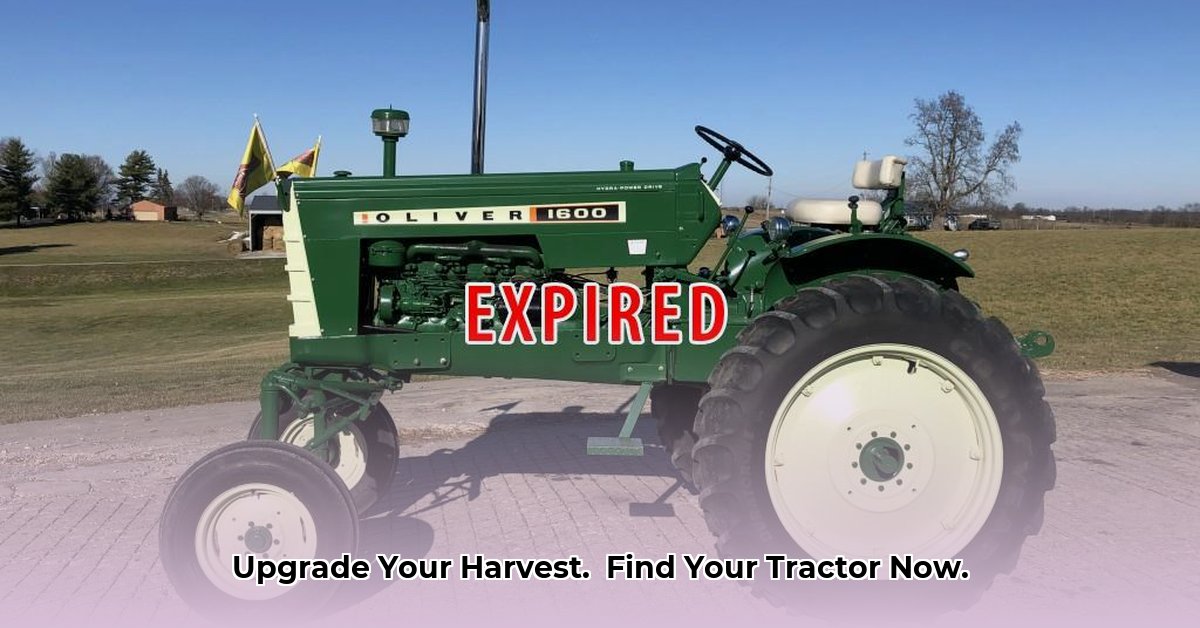
High-Crop Tractor Selection: A Comprehensive Guide for Increased Yields
Buying a high-clearance tractor is a significant investment impacting farm efficiency and profitability. This guide simplifies the process, enabling you to select the ideal machine for maximizing your harvests. For the latest models, check out new Case IH tractors.
Assessing Your Farming Needs: Tailoring Your Tractor Choice
Before exploring tractor models, thoroughly evaluate your farm's specific requirements. This ensures a proper fit, much like choosing the right shoes for a specific activity.
- Crop Type: Different crops demand varying tractor capabilities. A tractor suitable for tall corn might not be ideal for low-lying soybeans. Consider the specific needs of your crops during all growth stages.
- Acreage: The size of your farm directly relates to the required tractor horsepower and capabilities. Small operations need less powerful tractors, reducing costs, while large farms demand greater capacity.
- Budget: High-clearance tractors vary significantly in price. Establishing a realistic budget helps narrow your options and prevents overspending.
- Experience Level: Beginners might prefer user-friendly tractors with simpler controls, while experienced farmers may benefit from advanced features and customization options.
These considerations refine your search and prevent purchasing an unsuitable tractor.
Key Features of High-Clearance Tractors: Defining Your Must-Haves
High-clearance tractors protect crops from damage, but certain features are more effective than others. Prioritize these key aspects:
- Ground Clearance: This is paramount. Aim for at least 18 inches; many models offer even higher clearance. Greater clearance minimizes crop damage. A higher clearance significantly reduces crop damage, improving yields and reducing wasted effort. Do you need 24 inches of clearance or will 18 inches suffice?
- Horsepower: Higher horsepower provides greater power for heavier loads and larger fields. However, it increases the purchase price and fuel consumption. Finding the optimal balance is crucial for efficiency and cost-effectiveness. What is the ideal horsepower for your acreage and crop types?
- Fuel Efficiency: Fuel costs are substantial. Selecting fuel-efficient engines saves money and reduces environmental impact. How does the fuel efficiency of a tractor directly impact your total operating costs per acre?
- Transmission: Manual transmissions offer greater control, whereas automatic or semi-automatic transmissions provide ease of use, especially during extended operating hours. Does your preference for manual or automatic transmission impact operator fatigue and efficiency?
- Attachments: Compatibility with essential implements (planters, plows, sprayers, loaders) expands tractor versatility. Ensure your chosen model is compatible with your existing and future equipment requirements. What attachments are essential for maximizing productivity of your chosen high-clearance tractor?
Comparing Leading Brands: A Market Overview
Several reputable manufacturers offer high-clearance tractors. John Deere, Kioti, and McCormick are established brands with diverse models and specifications. Thorough research and comparison are essential.
(Note: The following table provides illustrative data. Always verify specifications with the manufacturer or reliable sources before purchasing. Pricing is highly variable based on features, condition, and location.)
| Brand | Model Example (Illustrative) | Horsepower (approximate) | Ground Clearance (approximate) | Fuel Type | Typical Price Range (USD - illustrative) |
|---|---|---|---|---|---|
| John Deere | 5100MH | 50-80 | 18"+ | Diesel | $50,000 - $100,000+ |
| Kioti | CK3520 | 35 | 12-16" | Diesel | $25,000 - $40,000+ |
| McCormick | X50.40 HC | 40 | 18"+ | Diesel | $35,000 - $60,000+ |
Locating Your Ideal Tractor: Exploring Sales Channels
Several avenues exist for finding high-clearance tractors:
- Dealerships: Dealerships allow in-person inspection, expert consultation, and test drives.
- Online Marketplaces: Online platforms offer extensive selections of new and used tractors, enabling broader geographic reach.
- Auctions: Auctions present potential cost savings on used tractors. However, rigorous pre-purchase inspections are crucial.
For used tractors, a thorough inspection by a qualified mechanic is crucial to prevent costly future repairs.
Budget and Financing: A Strategic Approach to Investment
High-clearance tractors represent a significant investment. Plan carefully, incorporating initial purchase price, maintenance, fuel, and potential repairs. Explore financing options, understanding interest rates and repayment terms. Proper financing ensures a manageable payment schedule that fits your cash flow.
Minimizing Environmental Impact: Evaluating CO2 Emissions
Fuel efficiency and CO2 emissions are increasingly important considerations. A systematic approach helps compare tractor emission profiles effectively. "In today's agricultural landscape, reducing the environmental footprint is paramount," says Dr. Emily Carter, Professor of Chemical and Biomolecular Engineering at Princeton University. "Choosing a tractor with lower emissions directly contributes to sustainable farming practices.”
Key Considerations for Comparing CO2 Emissions:
- Manufacturer Specifications: Review manufacturer data sheets for CO2 emissions (g/kWh or g/hp-hr).
- Standardized Data: Ensure consistent testing protocols for accurate comparisons.
- Implement Usage: Consider implement type and its impact on fuel consumption. Heavier implements increase fuel consumption and therefore emissions.
- Fuel Efficiency: Analyze fuel efficiency (liters/hour or gallons/hour) in conjunction with CO2 emissions.
- Engine Technology: Investigate engine features (SCR, DPF) that reduce emissions.
- Real-World Conditions: Lab results may differ from real-world conditions.
- Independent Reviews: Consult reputable agricultural publications for objective reviews.
Making an Informed Decision: A Recap of Key Steps
Choosing a high-clearance tractor is a crucial decision. Taking a systematic approach ensures a profitable and sustainable investment. By carefully considering your needs, conducting thorough research, and seeking professional guidance, you can make a well-informed decision that significantly enhances your yields and operational efficiency.